How it works

Watch videos on how to implement parts of the program, how to tap the charts and how to play games.

How to use Sound Charts

1st Sound Chart
Call & Response

Tap the chart by first listening to the teacher and then responding. When done daily, this low stress activity builds the necessarily neural pathways in the brain for letter-sound connections along with phonemic awareness.

2nd Sound Chart
Call & Response

Similar to the 1st chart, the second chart includes the short vowels and more challenging sounds from the 1st chart.

1st Sound Chart
Everyone all together

After children have tapped the call & response video for several weeks and they know the chart and sounds well, have them try tapping it straight through. They can do this alone or with a class.

Consonant Blends
Call & Response

Use a call and response method for teaching the chart that contains common consonant blends. Practice using that method until the child knows the chart well enough to do it alone or all together as a whole class.

Vowel Teams Chart
Call & Response

The child or class can begin learning this chart within a few months of starting the program. 1st graders and up may know many of these vowel teams but not all of them. Tapping the chart daily helps to move the sound/symbol connections into long-term memory which is an aid to reading and spelling.

Syllables Chart
Call & Response

This chart is used in a variety of ways. Tapping this chart allows the child to practice the different vowel sounds of the three most popular syllable types: closed, open and Silent E. The chart also teaches the Final Stable Syllable (_le or C+le) and 3 sounds of -ed.

Kindergarten - whole chart

Very young brand new readers benefit from using the K Chart where they are slowly introduced over several weeks to one vowel sound and several consonants. This video is the entire K chart being tapped call & response.

K Chart (Tapped Line by Line)

Kindergarten Chart (Tapped Line by Line) This video introduces each line from the chart individually using call & response.

How to play Games

Go Fish

Children play Go Fish using the BFR Card Decks that they make or that are found in the Games Books. The cards can be simple (single word) or have phrases or a series of words with patterns.

Bingo

When the child makes their own BINGO board, they are practicing how to spell the words you are calling out. Use the word lists from the BFR Lesson Pages in the Lessons Book or Training Companion Guide. You don’t need any other materials except paper and pencil (or markers).

Face-Up & Face-Down Memory

Almost any card deck can be used to play Face Up or Face Down memory. Face Up memory is wonderful for children who struggle with remembering where the cards are. It engages them in successful repeated word reading alone or with a friend/adult.

Short Vowel Chart Game

When you have a child who is struggling with hearing and saying the correct short vowel sounds, this is a game you can play to practice to hearing the sounds.

Go Fish - Sound Charts

Watch how we turned the 1st chart (alphabet chart), Blends Chart (consonant blends), and Teams Chart (Vowel Teams and Bossy R’s) into card decks so you can play memory (3 ways), or Go Fish.

Game Board - Sound Charts

This game provides an engaging way to practice those sound/symbol connections with a familiar tool – the chart. Use this type of game board with any chart (1st, Blends, Teams or Syllable).

I have.../Do You Have...?

Going between the short vowel and long vowel (and between the two syllables types) is a skill that needs practice even in with older children who are building automaticity. This is from a real group tutoring session. Yes, they are silly but joy increases the learning.

TCH Flip Game

When do you use TCH at the end of a word? Play this simple Flip Game to practice the rule. Play the same game again and again. Repetition is key!
Register Now!

Ready to start?

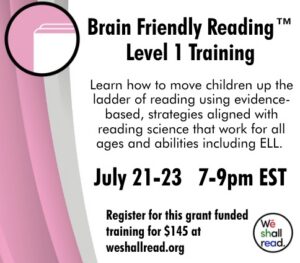
Register now for BFR training and gain proven, research-based strategies to help your students move up the ladder of reading.